
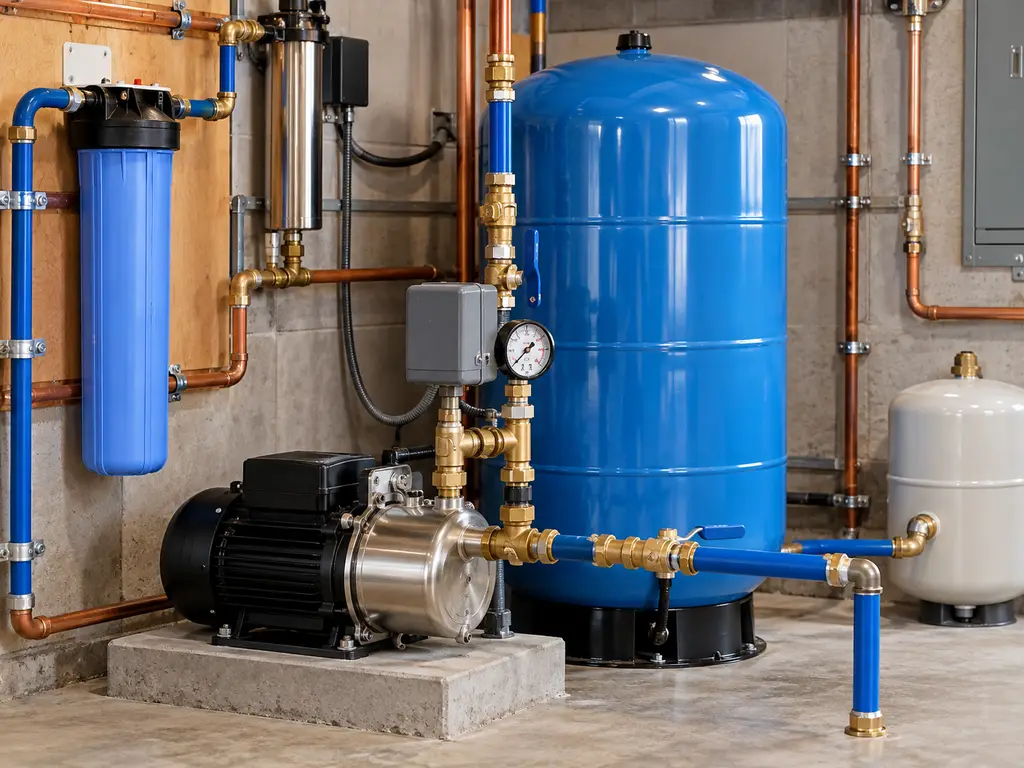
Submersible well pumps in Ellensburg and Kittitas County often stop working without warning. Homeowners may notice no water from taps, unusual noises from the well, or fluctuating pressure. These signs point to problems deep underground where the pump sits below the water line.
Common causes include motor failure, clogged intakes, worn seals, or electrical issues in the control box. A qualified provider checks the entire system rather than assuming the pump itself needs work. Factors like sediment in local wells or age of the installation can influence what fails first.
Repair versus replacement depends on the pump condition, well depth, and part availability. Providers assess whether fixing a motor or impeller makes sense or if a full unit swap is more reliable long term. Ellensburg Well Pump Connect helps match you with providers who can inspect the setup safely.
Not every dead pump is a failed pump
On three-wire submersible pumps, a failed start capacitor or relay in the above-ground control box will stop the pump, and so will a failed pressure switch. These are checked before anyone pulls the pump from the well, because pulling a pump takes more time and equipment. If you have no water right now, start with the emergency no-water checklist; if the pump runs but delivers nothing, see well pump running but no water.
What submersible pump repair typically covers
✓Submersible Motor Assessment
A provider checks motor function and wiring to identify electrical faults causing loss of water pressure.
✓Impeller and Seal Inspection
Technicians evaluate wear on impellers and seals that can reduce flow or allow debris into the system.
✓Control Box and Wiring Check
This covers testing capacitors, relays, and connections that often fail in older Kittitas County installations.
✓Well Head and Drop Pipe Review
Providers inspect connections at the well head and pipe condition to rule out leaks or blockages before deeper work.
How it works
- 1
Describe the Symptoms
Note when the issue started, any recent power changes, or unusual sounds from the well area.
- 2
Review the Well System
Gather details on pump age, recent maintenance, and water quality observations around the property.
- 3
Provider Evaluates the Cause
A local technician performs safe diagnostics on the electrical and mechanical components without homeowner intervention.
- 4
Discuss Repair or Replacement Options
Compare costs and timelines for fixing the existing pump versus installing a new submersible unit suited to the well.
What affects the cost
The biggest factor is whether the pump has to come out of the well. Above-ground control repairs cost much less than pulling a pump, and pump depth, pipe type and access all affect pulling time. See typical well pump repair costs.