
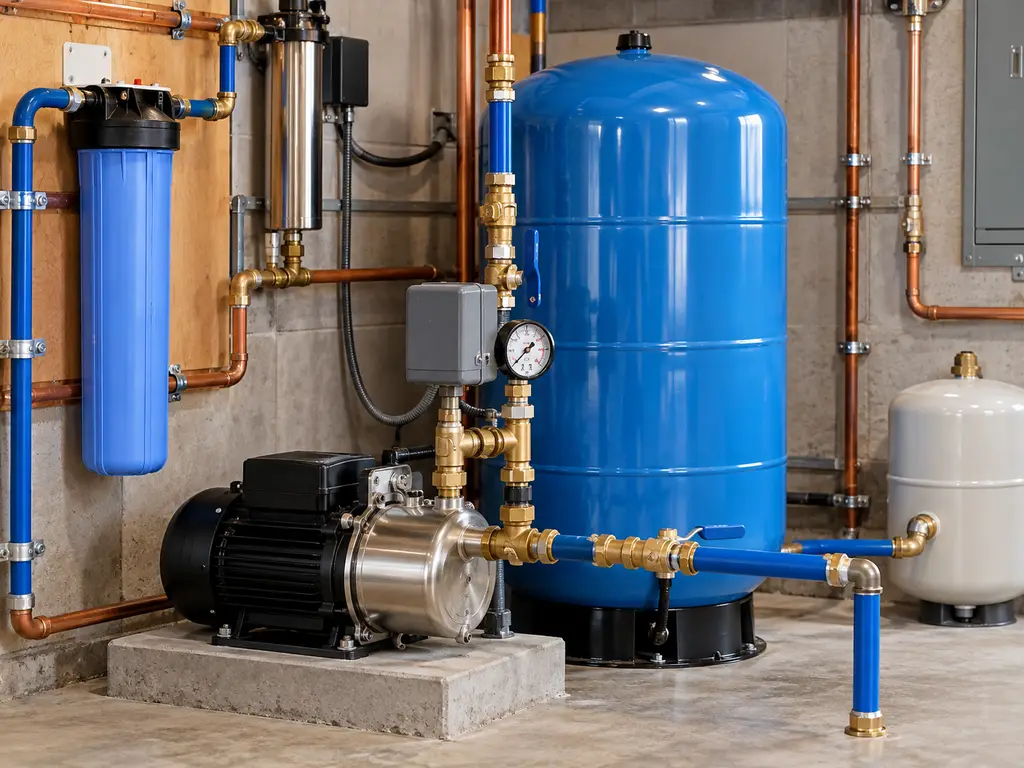
No water from the taps often signals a well pump problem in Kittitas County homes. Homeowners may notice sputtering flow, unusual noises from the pressure tank, or complete loss of pressure after power fluctuations. These symptoms point to failing components rather than simple clogs or seasonal changes.
Pumps can wear from constant cycling, sediment in the well, or electrical issues in the control system. In older Ellensburg properties, age-related motor fatigue or corroded piping frequently leads to replacement rather than repeated repairs. A qualified provider checks system age and usage patterns before recommending action.
Technicians typically test pressure, inspect wiring and switches, and measure pump performance without homeowners opening panels. They weigh repair costs against replacement when parts are obsolete or the unit has reached the end of reliable service. Describe your well problem to connect with a provider who can explain the options for your setup.
Questions to ask before a replacement
Worth confirming with the provider
- •Is the new pump sized for the well depth, the well’s yield and the household’s demand, not just matched to the old one?
- •Will the drop pipe, wire, splices and check valves be inspected or replaced while the pump is out of the well?
- •Does the pressure tank or pressure switch need replacing at the same time?
- •What warranty comes with the pump and the labor?
Your well report from the Washington Department of Ecology can help with depth and construction details. For a pump that might still be repairable, see submersible well pump repair or well system diagnostics first.
What well pump replacement typically covers
✓Submersible Pump Replacement
Replaces deep-well units that sit below the water line and restores steady pressure for homes relying on groundwater sources.
✓Jet Pump Replacement
Swaps out above-ground jet systems common on shallower wells and improves reliability when suction or priming issues appear.
✓Well Pump Motor Replacement
Targets failing motors while keeping the existing pump housing, often a cost-effective step before full system overhaul.
✓Control Box and Wiring Updates
Refreshes outdated controls and wiring that cause intermittent operation and supports consistent pump performance after replacement.
How it works
- 1
Describe the Symptoms
Note when pressure drops, noises occur, or water stops flowing so providers understand the timeline and patterns.
- 2
Review the Well System
Gather details on pump type, well depth, tank size, and recent changes to narrow possible causes quickly.
- 3
Provider Evaluates the Cause
A local technician tests electrical and mechanical components to confirm whether repair or replacement fits the situation.
- 4
Discuss Repair or Replacement Options
Review findings, compare longevity and costs, and decide on next steps with a provider familiar with Ellensburg conditions.
What affects the cost
Replacement cost depends mostly on pump type and size, well depth, whether new pipe and wire are needed, and access to the well. See typical well pump costs in Central Washington.